
Knox County Arrest Records and Charges
An arrest record is tied to the law-enforcement and jail side of an event. It can show the person arrested, booking date, arresting agency, sheriff or police charge text, bond amount, and custody status when that information is public. The court charge record begins when the State of Indiana, through the Knox County Prosecutor's Office, files formal charges in court. The court case then tracks hearings, pleas, charge changes, disposition, sentence, and financial obligations.
The distinction matters. The sheriff roster may show arrest-side charge language before the prosecutor decides what to file. MyCase may later show different filed charges, amended charges, dismissed counts, or a final conviction. For the full case file and outcome, use Knox County criminal court records. For custody and jail roster detail, the sheriff app and roster are the official channels described below. Do not treat this as a promise of a county mugshot database or a complete active-arrest index.
Find Knox County Arrest Records
Use more than one official channel when checking arrest records and charges after arrest. The Knox County Sheriff's Office provides the jail and app-side public safety tools. The sheriff app/web interface includes inmate search, most wanted, sex offender links, tip submission, contact information, and a "Court Case" link to MyCase. MyCase is where formal filed court charges and court status appear for public cases.
- Check the sheriff inmate roster or app if the question is current or recent jail custody.
- Search Indiana MyCase by defendant name or case number, with County set to Knox.
- Open the court case and compare filed charges, statute text, offense level, plea, and disposition to the booking-side charge text.
- Contact the Knox County Clerk for certified copies or court documents not visible online.
- Contact the Sheriff's Office for jail custody process questions or public records held by the sheriff, subject to APRA limits.
MyCase is the better source for court status. The sheriff roster is the better source for custody and booking facts. Prosecutor and public defender offices appear in the legal process, but the Clerk is the neutral source for certified court records.
Knox County Arrest Record Channels
The sheriff's public web and app system is important because several arrest-related features are exposed there rather than on a static county page. The official sheriff app is named Knox County Sheriff's Office (IN). Its manifest lists Submit a Tip, Inmate Search, Sex Offenders, Most Wanted, Court Case, Commissary, Inmate Communication, Sheriff Sales, Gun Permit, Contact Us, and news or push-notification tools.
The Knox County Sheriff's Office website is the public entry point for the sheriff-side arrest record tools.

That source is useful for separating law-enforcement custody questions from court case and clerk-copy questions.
The sheriff app manifest documents the feature set, including the court case link to MyCase and jail-related tools.
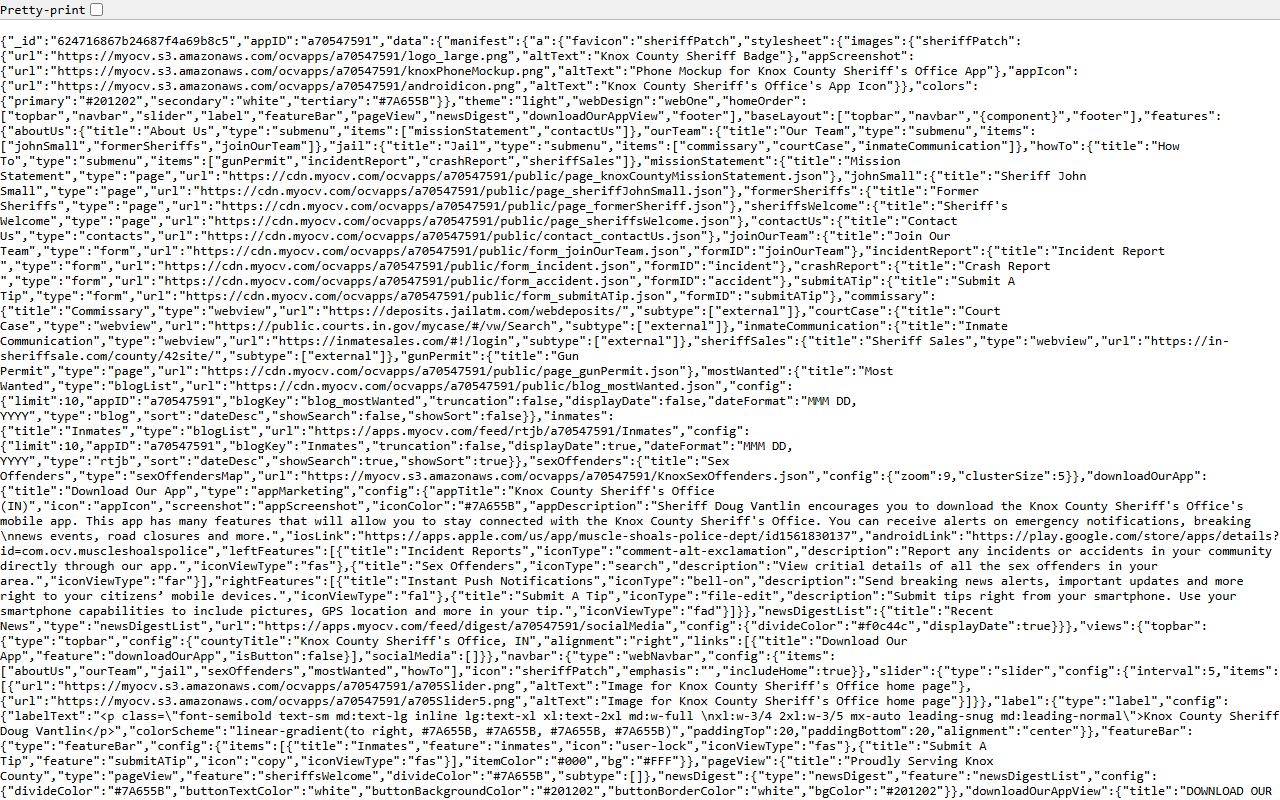
For Knox County arrest records, the app context matters because inmate and most-wanted information is surfaced through the OCV app/web interface.
Charges After Arrest Documents
After an arrest, the prosecutor decides what charges to file. Indiana counties use a Prosecuting Attorney, not a District Attorney title. The Knox County Prosecutor's Office files charges for the State of Indiana. A filed court charge may be based on probable cause, law-enforcement reports, witness information, and prosecutor review. It may differ from the jail's initial booking text.
| Complaint | Information | Indictment | |
|---|---|---|---|
| Filed By | Law enforcement or prosecutor depending context. | Prosecutor. | Grand jury process. |
| Common Use | Starts or supports a criminal allegation. | Common formal charging document in criminal cases. | Used when a grand jury returns charges. |
| Record Effect | Can appear in the early case file. | Defines formal counts tracked in MyCase. | Defines charges returned through grand jury action. |
| Key Caution | Still an allegation. | Still not a conviction. | Still must proceed through court. |
Knox County Charge Status
Charges can change. A prosecutor may file charges, amend the wording, add counts, reduce an offense level, dismiss a count, or proceed to plea or trial. The court record should be read at the charge level because one case can contain several counts with different outcomes. A single arrest can produce no filed case, one filed charge, or multiple filed charges.
| Status | What It Means |
|---|---|
| Pending | The charge is still active and has not reached final disposition. |
| Amended | The charge text, statute, count, or level changed by court filing or order. |
| Reduced | The filed charge moved to a lower offense level or lesser count. |
| Dismissed | The charge was ended without a conviction on that count. |
| Guilty / Convicted | The court entered a guilty plea, verdict, or conviction on that charge. |
| Acquitted | The defendant was found not guilty on that charge. |
Charges vs Convictions
Being arrested or charged is not the same as being convicted. Knox County arrest records can show initial charge text from jail intake. A Knox County court charge record can show what the prosecutor filed. Only the court disposition tells whether a charge ended in conviction, dismissal, acquittal, amendment, or another result. Always read through the disposition and sentence before drawing conclusions.
| Charge | Conviction | |
|---|---|---|
| Meaning | An accusation filed or listed after arrest. | A guilty plea, guilty verdict, or court finding of guilt. |
| Timing | Early in the case or at booking. | After plea, trial, or court ruling. |
| Where Seen | Sheriff roster, charging document, MyCase charge rows. | Disposition and sentencing entries in the court record. |
| Risk of Misread | May later be changed or dismissed. | Still should be checked for appeal, expungement, or later orders. |
Arrest Charge Office Contacts
The Sheriff's Office, Prosecutor, Clerk, court, and public defender all have different roles. The sheriff handles custody and many jail-side public records. The prosecutor files and manages criminal charges for the State. The Clerk keeps the court file and certified copies. The court sets hearings and enters orders. Public defense is tied to appointment and eligibility for defendants who cannot afford counsel.
The sheriff contact JSON lists the official contact channel for Knox County IN Sheriff's Office.
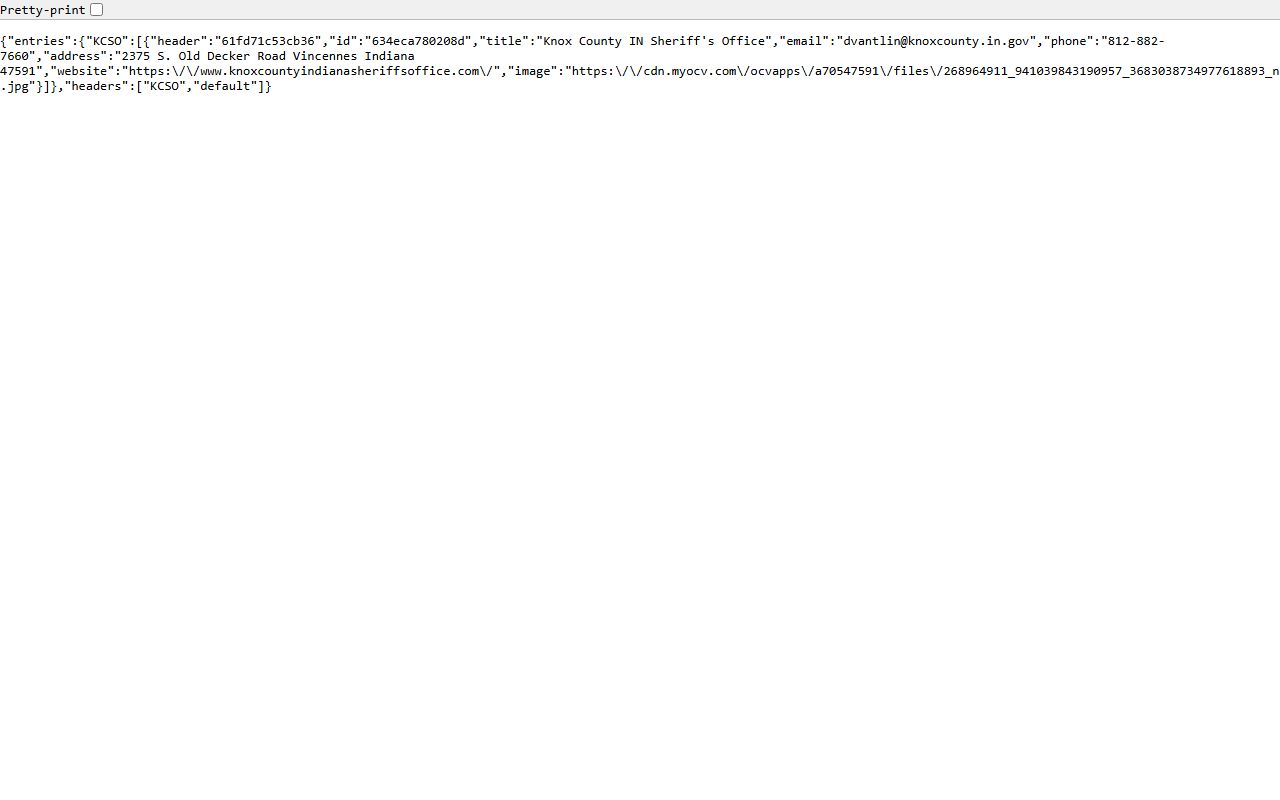
That contact source supports using the Sheriff's Office for custody process questions rather than asking the Clerk about jail operations.
Knox County Sheriff's Office
2375 S. Old Decker Road
Vincennes, IN 47591
(812) 882-7660
Business hours listed in sheriff app materials: 8:00 A.M. to 5:00 P.M. EST, Monday through Friday.
Tips and Public Record Limits
The sheriff app includes a Submit a Tip feature. It is for public safety tips, not for requesting court charge records, resolving a warrant, or reporting an emergency. The app's tip form configuration says not to use it for a crime in progress and to call 911 for emergencies. For records, use the agency that owns the record: sheriff for jail or law-enforcement records, Clerk for court copies, and MyCase for the public court index.
The official Submit a Tip form configuration documents that the tip tool is a reporting channel rather than a records request form.
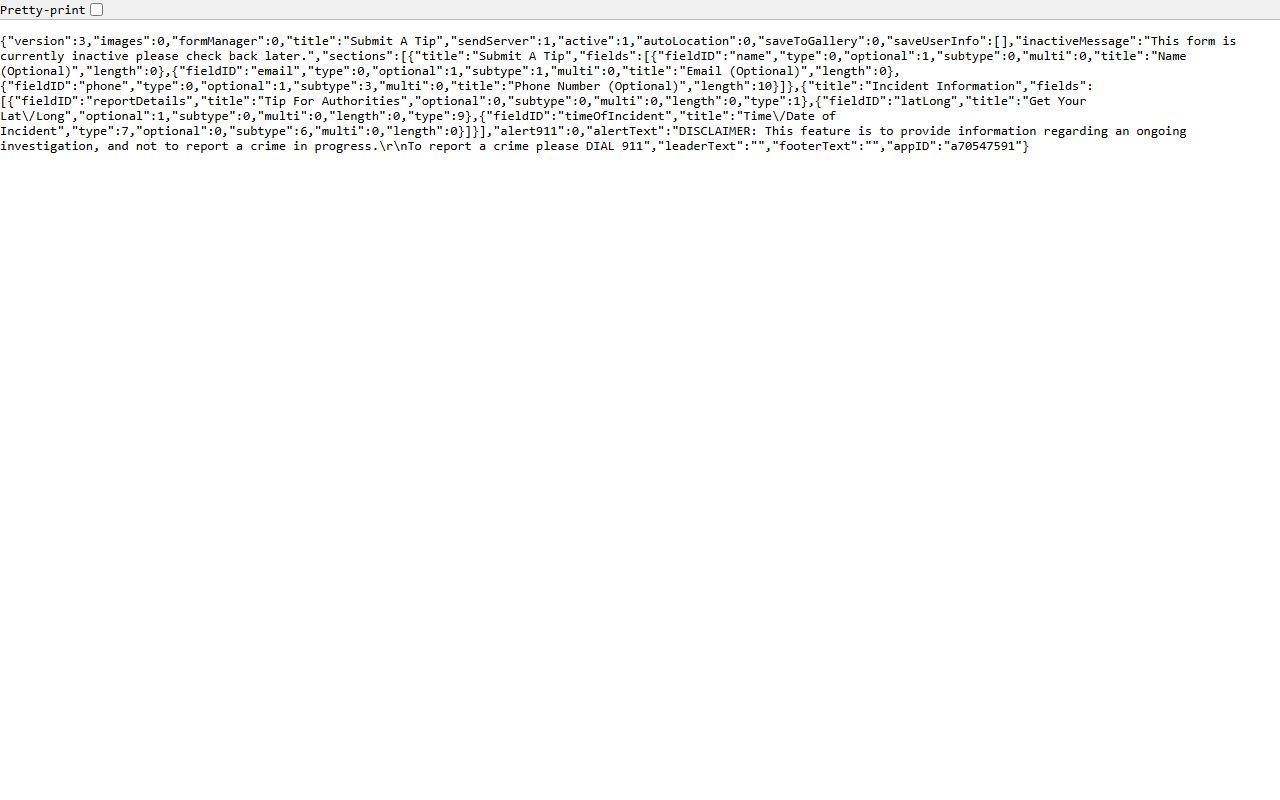
For Knox County arrest records, this keeps the request path clear: tips go to the sheriff, certified court documents go through the Clerk.
Sealed Knox County Arrest Records
Indiana expungement can limit public access to eligible arrests, charges, and convictions under IC 35-38-9. Juvenile records are also restricted under IC 31-39. Some law-enforcement records may be withheld under public-record exemptions for investigations, security, medical details, juvenile material, or other protected content.
| Sealed | Expunged | |
|---|---|---|
| Public Search | Record is hidden or restricted by rule, statute, or order. | Public access is limited after a granted expungement petition. |
| Record Location | The court or agency may still retain the file. | Government records may remain available to entities with statutory access. |
| Who Decides | Court rule, statute, or judge. | Indiana expungement statute and court order. |
| User Caution | Do not assume a missing result means no event occurred. | Do not assume expungement destroys every related agency record. |
Statewide Criminal History Context
MyCase shows public court cases, not every statewide criminal-history data point. Sheriff roster entries show custody and booking details, not final court outcomes. A public-records request to the sheriff or prosecutor may be subject to Indiana's Access to Public Records Act and exemptions for investigatory records. A criminal-history or background-screening process may have different rules from a casual court lookup.
For FCRA-regulated uses such as employment, tenant screening, credit, or insurance, casual search results should not be used as a consumer report. Verify official court records with the Clerk, review dispositions carefully, and use lawful screening channels when a formal background check is required.
Important: Booking text, filed charges, and convictions are different record points and should not be merged into one conclusion.
Restricted Knox County Charge Records
Restricted charge records can include juvenile matters, sealed charges, expunged arrests, confidential informant material, medical details, protected addresses, victim-safety details, and active investigative records. A court docket may show limited information while the underlying document is withheld. A sheriff or prosecutor administrative record may be handled under APRA rather than court-record rules.
If a charge is missing from MyCase, check name spelling, county filter, court filter, and timing. Then contact the Clerk or assigned court with the known case information. If the question is current jail custody, call the Sheriff's Office or use the official roster. If the issue is legal exposure, bond, surrender, or plea options, contact an attorney or ask the court about public-defender eligibility.